Address
304 North Cardinal
St. Dorchester Center, MA 02124
Work Hours
Monday to Friday: 7AM - 7PM
Weekend: 10AM - 5PM
Address
304 North Cardinal
St. Dorchester Center, MA 02124
Work Hours
Monday to Friday: 7AM - 7PM
Weekend: 10AM - 5PM

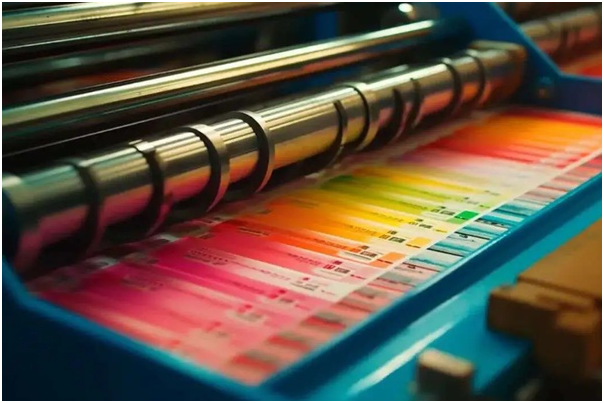
According to a new analysis by market research firm Smithers, packaging and label printing will be the only vertical to see significant growth over the next four years.
The 2029 Future Outlook for Packaging and Printing report predicts that the global packaging and label printing market will climb to US$618 billion (£502 billion) by 2029 at a solid growth rate of 3.6%. This growth is in stark contrast to the stagnation of demand for traditional graphic printing and the shrinking of the publishing and printing business.
1. Inkjet printing will become the fastest growing segment
Over the past few years, driven by technological advancements, changing consumer demands, and sustainable development, the printing industry has developed rapidly, and the automation process continues to advance until 2024.
According to the Smithers Institute’s “The Future of Global Printing by 2028” report, the global print market size is expected to grow from $889.4 billion to $1.16 trillion in five years to 2028. Among them, inkjet printing is expected to be the fastest-growing segment with a CAGR of 9.7%. Global print production will increase, from 44.1 trillion A4 prints in 2022 to 44.7 trillion A4 prints in 2028.
Digitalization has been widely used in the printing industry for many years, and the fundamental change in the past few years has been the advancement of automation processes to better reduce the costs of printing companies in managing operations, and this trend will continue until 2024. As the cost of inkjet printing equipment decreases, inkjet printing will enter more and more application areas and occupy more market share. Automation in the printing industry can also help printers attract and retain employees, as well as address the skills challenges necessary to produce new materials. More and more printing companies are focusing on automation and controllable processes to save production cycle and cost.
2. The investment in the commercial printing market is not decreasing
In 2024, the commercial printing segment is expected to develop similarly to 2023, with modest sales growth but tight margins.
According to the forecast of the American “Print Impression” magazine, by 2024, the sales of commercial printing are expected to increase by 1.5%-3%. The biggest challenges faced by commercial printers include inflation in operating costs, particularly rising labor costs, and effective responses to price increases. Key opportunities include enhanced risk management and the use of artificial intelligence to maximize productivity.
According to the report, the 86 commercial printers who participated in the Printing Union Alliance’s Industry Status Survey for the third quarter of 2023 generally believe that interest rate trends have caused customers to “tighten their belts”, and the situation in 2024 is also not optimistic.
When asked “what commercial printers are most worried about in the first half of 2024”, 79.1% of respondents chose whether sales can grow. 68.2% of respondents chose to maintain profitability, and 50% of commercial printers expressed concern about rising labor costs. Nearly 40% of respondents are very concerned about electronic alternatives to printed matter, and only 2.3% are concerned about their ability to access essential materials, down from 94.7% at the start of 2022.
When asked how they plan to improve profitability in the new year, more than 77%, 72.7%, and 63.6% of respondents plan to increase profitability through more effective cost control, more effective management, and more effective marketing, respectively.
At the same time, continued investment is an encouraging option. Despite the many uncertainties, 70.1% of commercial printers surveyed plan to invest in equipment, software, etc. in the new year, up from 58.7% at the start of 2023. Ideal capital investments include binding systems, workflow software, commercial inkjet, management intelligence applications (MSI, CRM, ERP, etc.), and print enhancement technologies. At the same time, 92.3% of respondents believe that improving productivity is by far the top investment objective.
3. Flexible plastics will rank first in the growth rate of the packaging market
The latest report, “The Future of Global Packaging by 2028”, also from the Smithers Institute, shows that the global packaging market will grow further in the future. The global packaging market size is expected to grow from $1.17 trillion in 2023 to $1.42 trillion by 2028, at a CAGR of 3.9%.
From the perspective of market regions, by 2028, the CAGR of the packaging market size in Africa, Asia, and Central and South America will be higher than the global average, and the growth of the packaging market in developing regions will account for the majority of the growth of the global packaging market. Among them, the Asian market alone will increase by 5.3% year-on-year.
The fastest-growing markets are Indonesia, the Philippines, and India. China has become the world’s largest single packaging market, and by 2028, the packaging market will account for 25.3% of the global market. Central and South America, Africa and the Middle East, despite their small packaging markets, have emerging potential that should not be underestimated.
In terms of end-use, in 2023, the packaging segment, which includes industrial, transportation, and others, will account for the largest market share of the global packaging market, reaching 43%, followed by food packaging (28%) and beverage packaging (14%). In terms of growth rate, healthcare packaging is expected to grow the fastest by 2028, with a compound annual growth rate of 5.7%. It was followed by food packaging and cosmetics packaging, with CAGRs of 4.4% and 4.2%, respectively.
From the perspective of packaging materials, flexible plastics and paperboard will be the two fastest growing material types, reflecting that the packaging industry will aim for greater sustainability. Among them, the global sales of flexible plastics will increase from US$197.7 billion in 2023 to US$253.2 billion in 2028, with a compound annual growth rate of 5.1%, making it the first in the growth rate of the packaging market in the next five years.
The cardboard market, which includes corrugated cardboard, folding cartons and liquid cardboard, is still the largest segment, with packaging consumption of US$373.8 billion in 2023, accounting for 32% of the global packaging market share; The segment will grow at a CAGR of 4.2% by 2028.
